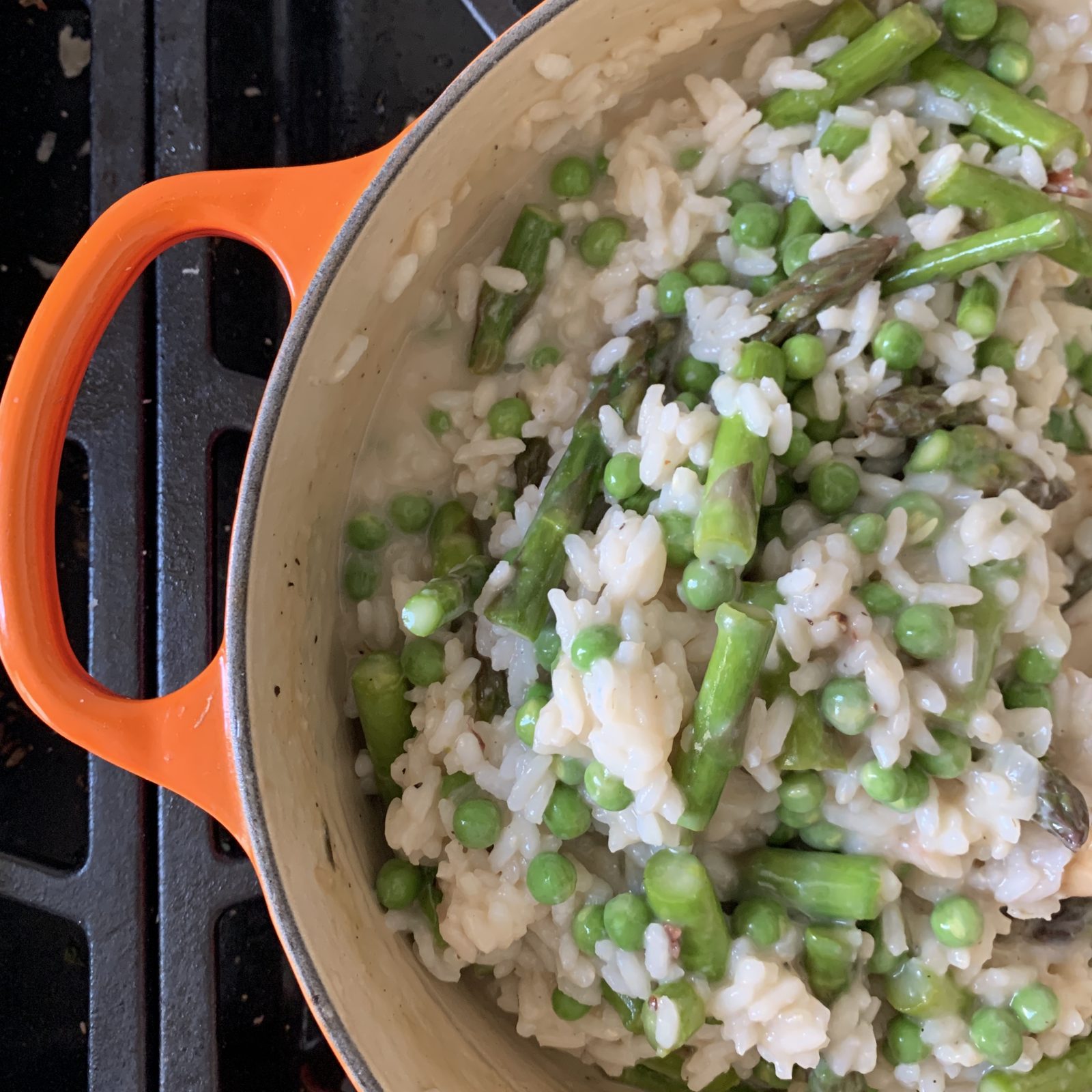
Asparagus & peas are the stars of this risotto with a waste-nothing parmigiano rind broth.
Ingredients:
2-3 rinds of parmigiano cheese
4 tablespoons butter, divided
1 shallot, chopped
1 bunch asparagus, tough ends trimmed, and cut into 1-1/2” pieces
1 cup shelling peas, shelled (you can use frozen if you can’t find fresh)
1 1/3 cup rice for risotto (carnaroli, vialone nano, or aborrio)
1 cup dry white wine, divided
zest and juice of one lemon
Salt & pepper
1/3 cup parmigiano, shredded
A few sprigs of parsley and/or chives, chopped
Method:
- Make the pargmigiano rind broth: Put parmigiano rinds and the tough ends from the asparagus into saucepan with 6 cups of water. Bring to a boil, then simmer for 1-2 hours on low. (You can also shorten the length of the simmer so it’s simmering while you are sautéing the shallot and prepping the risotto.)
- In a large heavy dutch oven or pot, melt 2 tablespoons of butter. Add the shallots, with a pinch of salt and pepper, and cook on low until they are translucent, about 7 minutes.
- Add the rice, stir so that each grain is coated in butter, and sauté on low for 5 minutes.
- Now we will start adding the liquid. There is a specific process to making a creamy risotto with the correct consistency: The stock or broth must be simmering, so it is at the same temperature as the cooking risotto. And one must add only a ladleful of liquid at a time (6 ounces), stirring until the liquid is absorbed by the rice before adding the next ladleful. The whole process takes about 30 minutes.
- To make this risotto, we will start by adding 1/2 cup of dry white wine, stir and let it fully absorb. Then move on to the parmigiano and asparagus broth, adding 1 ladleful, stirring, and adding the next ladleful when the liquid has been absorbed. Set your timer for 15 minutes.
- After your 15 minutes is up, add your chopped asparagus and shelled peas. Continue to ladle your broth, stirring, and watching. You will do this for another 10 minutes or so.
- Watch your risotto. It will tell you when to stop adding broth. The rice will turn translucent and plum up, and there will be a starchy creamy “sauce” forming. Taste the rice. It should feel tender enough that it is a pleasure to eat (not too hard), yet still keep some firm al dente texture. You do not want mush and the rice will continue to cook somewhat after you remove it from the heat, so make sure you’ve kept some al dente texture.
- Before you remove it from heat, stir in the last 1/2 glass of wine along with the juice and zest of your lemon. Taste it for salt and pepper. This dish usually likes plenty of black pepper.
- Optional: for pure decadence, stir in the last 2 tablespoons of butter to add to the creaminess.
- Remove from heat and stir in the grated cheese and herbs. Plate and enjoy immediately.
- If you have leftovers, they are great in soup the next day, or make arancini or risotto cakes by pan frying risotto patties. Enjoy!